
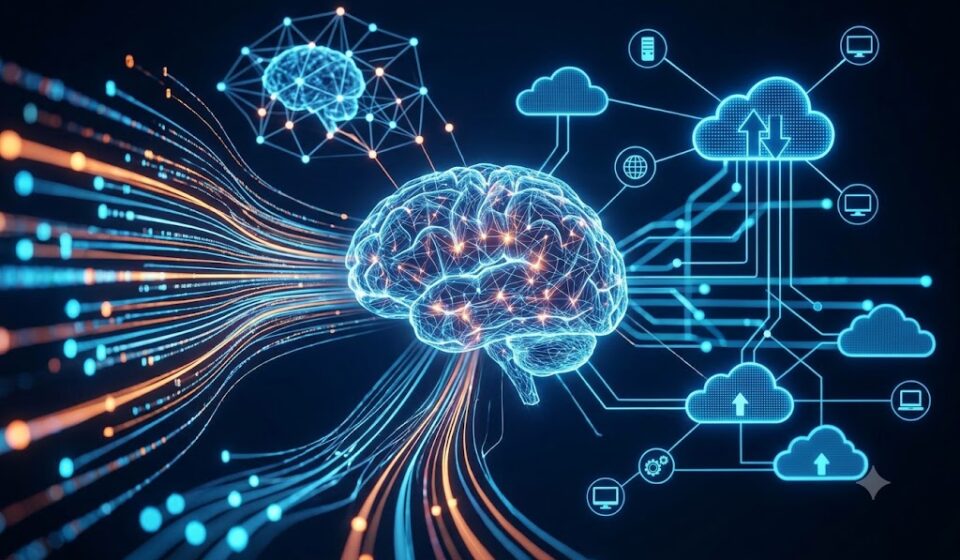
The modern digital landscape is shifting at a breakneck pace, and understanding how emerging techs net unparalleled efficiency is vital for tomorrow’s business survival. As we move deeper into 2026, isolated tech experiments are officially a thing of the past. Today, organizations worldwide no longer ask if they should adopt advanced systems, but how fast they can integrate them. This complete guide provides an in-depth exploration of the interconnected web of modern technology, shedding light on the systems reshaping global industries right now.
1. The Rise of the Agentic Economy
Artificial intelligence has evolved past basic generative content creation. Consequently, the tech ecosystem is entering the era of the agentic economy. Unlike older iterations that required constant human prompting, agentic AI operates autonomously to execute complex workflows, make real-time decisions, and manage cross-departmental operations.
According to a recent tech brief by NatWest Group, this transition radically alters normal enterprise functionality:
“We expect that the transition to the widescale use of AI agents will change the nature of the economy, creating a more ‘always-on’ approach. All organisations will need to adapt, and we will likely see the rise of both AI-native organisations and AI-only organisations.”
Intent-Driven Software Architecture
Furthermore, AI is completely overhauling software development lifecycles. Instead of manually writing thousands of lines of code, engineers now express their intent. The underlying autonomous systems handle the assembly, compilation, testing, and continuous deployment. This shift significantly reduces time-to-market and minimizes human error in codebase maintenance.
2. Cloud 3.0 and Distributed Infrastructures
The classical public cloud structures of the past decade are struggling to scale under the sheer computational weight of modern AI models. Therefore, Cloud 3.0 has emerged as the foundational infrastructure layer of 2026.
[Legacy Public Cloud] ---> [Cloud 3.0 Ecosystem: Hybrid, Multi-Cloud & Sovereign Nodes] ---> [Low-Latency Edge AI Inference]
Organizations increasingly reject monolithic cloud structures in favor of highly distributed frameworks. To manage sensitive corporate data and satisfy regional compliance laws, tech leaders rely heavily on a combination of:
-
Sovereign Clouds: Ensuring data remains within specific geographic borders to guarantee legal compliance.
-
Hybrid Deployments: Keeping proprietary data safe in private servers while using public networks for massive processing bursts.
-
Edge Computing Nodes: Processing information directly at the physical source to eradicate data transmission delays.
3. Physical AI and Next-Gen Automation
Another massive frontier where emerging techs net incredible real-world returns is the convergence of AI with physical hardware systems. Often referred to as “Embodied AI,” this discipline trains robots and automated machinery using advanced spatial physics engines and digital twins.
Bridging Simulation and Reality
Instead of training a robotic arm or autonomous delivery vehicle in a hazardous, real-world setting, engineers build flawless virtual copies of factories and smart buildings. Systems learn intricate maneuvers safely inside these virtual environments before deploying their skills onto real-world assembly lines. This reduces calibration periods down to a fraction of what they used to be.
4. Quantum Computing and Cryptographic Shifts
Quantum computing is finally transitioning from academic research labs to functional enterprise use cases. As these machines scale up their stable qubit counts, they present immense opportunities alongside critical security hazards.
The Post-Quantum Security Threat
Because quantum algorithms can easily break standard RSA encryption keys, the tech sector is rushing to deploy post-quantum cryptography (PQC). Progressive networks are actively overhauling their security protocols to embed quantum-resistant algorithms before malicious actors can exploit vulnerability windows.
High-Impact Industrial Use Cases
On the positive side, quantum computing accelerates discoveries across a wide array of research-heavy sectors. The table below outlines exactly where these computational jumps are making the largest impacts:
| Industry Sector | Primary Quantum Application | Anticipated Economic Impact |
| Pharmaceuticals | Molecular modeling & rapid drug discovery | Reduces drug formulation timelines by years |
| Logistics | Real-time global supply chain optimization | Minimizes transit fuel consumption and idle times |
| Finance | Complex multi-variable risk analysis | Optimizes massive investment portfolios in seconds |
| Energy | Grid optimization & new battery chemistry | Speeds up the transition to highly stable green grids |
5. Pros and Cons of Connected Tech Ecosystems
While navigating how emerging techs net global operational transformations, analyzing both sides of the coin remains essential.
Advantages
-
Exponential Productivity: Autonomous systems execute tedious back-office operations continuously without experiencing fatigue.
-
Predictive Decision-Making: Advanced analytical software sifts through billions of data endpoints to spot enterprise anomalies before they occur.
-
Immersive Interactions: Modern smart wearables and augmented reality devices allow field workers to receive real-time, hands-free information overlays.
Disadvantages
-
Severe Power Demands: Training advanced models and managing massive data centers strains regional power grids significantly.
-
Expanded Cyber Attack Surfaces: Connecting millions of new edge devices creates a playground for hackers if zero-trust architecture is omitted.
-
Technical Sovereignty Crises: Heavy reliance on specialized hardware manufacturers introduces distinct supply chain vulnerabilities.
6. Strategic Implementation Roadmap
To avoid drowning in this waves of innovation, enterprise leaders must deploy clear, deliberate technology roadmaps.
Step 1: Adopt Zero-Trust Architecture
Because modern infrastructures are highly decentralized, old-school network perimeters no longer safeguard assets. Implement a strict “never trust, always verify” standard across every single API connection and automated system node.
Step 2: Overhaul Data Cleanliness
Before deploying autonomous agentic workflows, clean up your internal data pipelines. If your systems ingest corrupted, disorganized data, your automated agents will inevitably execute flawed processes at scale.
Step 3: Invest in Green Compute Solutions
Because energy efficiency dominates the conversation regarding scalable compute systems, prioritize data centers that integrate sustainable infrastructure models.
As noted in a recent technology outlook published by Capgemini:
“Technology leadership is no longer about experimentation, but about constructing the durable foundations that future innovation will depend on.”
Frequently Asked Questions
What exactly does “emerging techs net” mean in a business context?
It refers to the compounding, interconnected value achieved when modern technologies—like agentic AI, Cloud 3.0, and quantum-resistant security—are woven into a single, cohesive network. Consequently, instead of running isolated tools, businesses use a unified digital net to capture, process, and secure global data autonomously.
How does agentic AI differ from traditional generative AI?
To understand this shift, consider that traditional generative AI requires continuous human prompting to produce a specific output (like writing an email or generating code). Conversely, agentic AI operates with true autonomy. For example, once you provide a high-level intent or goal, the AI agent independently breaks down the task, accesses necessary software tools, adapts to real-time obstacles, and ultimately executes the entire workflow.
Why is Cloud 3.0 necessary for modern enterprises?
This level of autonomy is exactly why legacy infrastructures are no longer enough. Currently, older public cloud systems are buckling under the massive data processing and low-latency demands of real-time AI. To address this bottleneck, Cloud 3.0 solves the problem by breaking down monolithic cloud setups into highly distributed, agile networks. Specifically, it seamlessly mixes sovereign regional clouds for strict legal compliance with edge compute nodes for instant data processing.
What is the biggest security threat to emerging networks right now?
However, as these networks expand, new vulnerabilities inevitably arise. The primary threat is the rapid advancement of quantum computing. Because scalable quantum systems will soon have the power to crack standard RSA encryption, businesses face severe data exposure if they fail to upgrade. As a result, networks must aggressively transition to post-quantum cryptography (PQC) to stay ahead of malicious actors.
How can a business begin safely adopting these next-gen technologies?
Fortunately, building a defense-in-depth strategy mitigates these risks. Start by implementing a strict zero-trust security architecture across all digital assets, ensuring every automated connection is verified. Immediately following that, prioritize aggressive data cleansing. After all, clean, well-structured internal pipelines are mandatory before you can successfully deploy autonomous AI agents to manage your workflows.
Summary: Crafting the Future
Ultimately, the way emerging techs net positive outcomes relies on a balanced approach to automation, security, and computing ethics. By building modular cloud systems, protecting data with post-quantum encryption, and embracing the agentic economy, your business can successfully ride the wave of this technological revolution. Turn intent into execution, modernize your tech stack safely, and anchor your business securely in the digital economy.