
Introduction
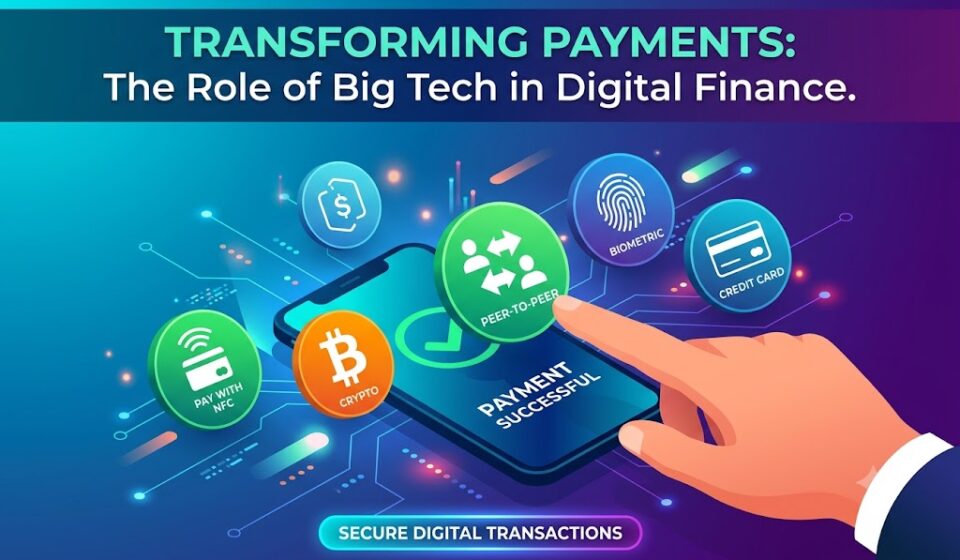
Big tech’s role in digital payments has become a transformative force, fundamentally altering how consumers and businesses exchange value in the modern economy. Initially, what began as simple mobile wallet extensions for smartphone users has evolved into comprehensive financial ecosystems that challenge the dominance of traditional banking institutions. Furthermore, as companies like Apple, Google, and Meta integrate payment functionalities directly into their platforms, they offer unparalleled convenience and speed. Nevertheless, this shift also brings significant questions regarding market concentration, data sovereignty, and the future stability of the financial system.
Table of Contents
-
Introduction
-
The Rise of Big Tech in Financial Services
-
How Big Tech Redefines the Payment Experience
-
Pros and Cons of Big Tech in Digital Payments
-
The Impact on Traditional Banking and Fintech
-
Regulatory Challenges and Data Privacy
-
Future Trends: 2026 and Beyond
-
Conclusion
-
Frequently Asked Questions (FAQ)
-
Article Disclaimer
The Rise of Big Tech in Financial Services
Big tech companies—often referred to as “BigTechs”—have transitioned from peripheral technology providers to core players in financial infrastructure. In fact, big tech’s role in digital payments is primarily driven by a strategic desire to increase user engagement, capture valuable transaction data, and subsequently monetize their massive installed user bases.
The Ecosystem Strategy
Contrastingly, unlike traditional banks that focus solely on financial products, tech giants prioritize ecosystem stickiness. By effectively embedding financial services (such as Apple Pay, Google Pay, or Meta Pay) into their hardware and software, they create frictionless experiences that consequently keep users locked within their walled gardens.
How Big Tech Redefines the Payment Experience
Big tech firms have mastered the art of “invisible payments.” They leverage advanced technology stacks to remove the friction points of traditional banking.
-
User Experience (UX) Supremacy: Through biometric authentication (FaceID, fingerprint) and Near-Field Communication (NFC), these giants have made the checkout process near-instant.
-
Data-Driven Personalization: By analyzing spending patterns, these platforms can offer personalized recommendations, loyalty rewards, and targeted financial products.
-
Global Reach: Services like Google Pay and Apple Pay operate across millions of merchant locations globally, effectively standardizing mobile commerce.
Pros and Cons of Big Tech in Digital Payments
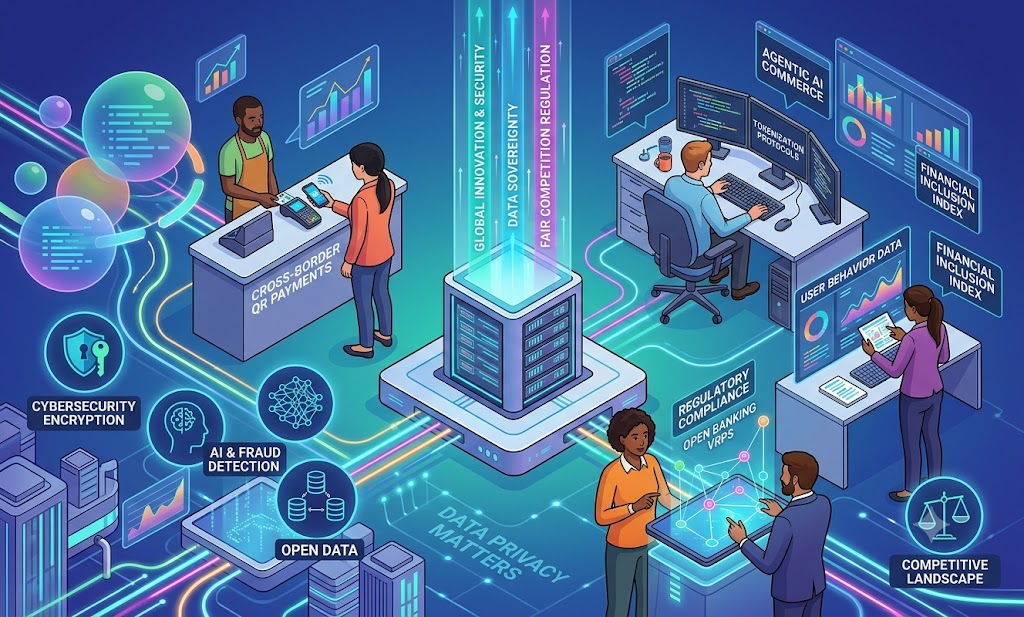
The influence of technology giants in the payment sector presents a complex trade-off between innovation and control.
| Feature | Benefits | Drawbacks |
| User Convenience | Seamless, fast transactions. | Heavy dependency on proprietary tech. |
| Innovation | Rapid adoption of new tech (NFC, AI). | Potential for monopolistic behavior. |
| Security | Advanced encryption and biometrics. | Centralized risk (single point of failure). |
| Financial Inclusion | Easier access for the underbanked. | Concerns over data privacy and usage. |
The Impact on Traditional Banking and Fintech
Currently, traditional banks find themselves in a “coopetition” model—collaborating with tech giants to reach customers while simultaneously competing with them for the customer relationship.
“The entry of big techs into the financial services sector poses numerous risks, particularly to financial stability, fair competition, consumer and data protection.” — Finanzwende Recherche
Consequently, fintech startups are also feeling the pressure. While some thrive by integrating into these large ecosystems, in contrast, others struggle to compete with the massive marketing budgets and existing user reach of the tech giants.
Regulatory Challenges and Data Privacy
As a result of this shift, as big tech companies gain systemic importance, regulators are becoming increasingly vigilant. The primary concerns revolve around the “trilemma”: balancing credit access, rent extraction, and user privacy.
-
Antitrust Concerns: Regulators are questioning whether these platforms unfairly prioritize their own payment solutions over competitors.
-
Privacy Regulation: Furthermore, with the Bank for International Settlements highlighting the risks of monopolistic platforms compromising user privacy, new laws are focusing on data silos and the right to financial portability.
Future Trends: 2026 and Beyond
As we move through 2026, several key trends are defining the future of payments:
-
Agentic Commerce: AI agents will perform autonomous payments on behalf of users based on tokenized credentials.
-
Furthermore, the Convergence of Identity and Payment: The “Log in and Pay” model will become the industry standard, where authentication and transaction authorization happen simultaneously.
-
Additionally, regarding Variable Recurring Payments (VRPs): Open banking will allow users to grant granular control over recurring payments, effectively bypassing traditional card networks.
Video Resource
Conclusion
Ultimately, big tech’s role in digital payments is a double-edged sword. It has undoubtedly pushed the boundaries of what is possible in financial technology, offering consumers faster, safer, and more convenient ways to pay. However, the concentration of power in a handful of companies requires ongoing scrutiny from regulators to ensure a competitive and fair landscape. As technology continues to evolve, the balance between innovation and consumer protection will remain the defining challenge of the decade.
9. Frequently Asked Questions (FAQ)
Q: Are big tech payment services safe? A: Undoubtedly, these services utilize advanced security protocols like tokenization, biometric authentication, and end-to-end encryption to protect user data, making them highly resilient against unauthorized access.
Q: Consequently, how do big tech companies make money from payments? A: They often earn through transaction fees, data insights for targeted advertising, and by keeping users within their wider ecosystem, which subsequently increases hardware or service sales.
Q: Will big tech replace traditional banks? A: In reality, it is unlikely. Instead, the industry is moving toward a collaborative model where banks provide the underlying infrastructure (Banking-as-a-Service), while tech giants provide the seamless, user-facing interface.
Q: Furthermore, what are the primary regulatory concerns regarding these platforms? A: Regulators are primarily focused on maintaining a level playing field, specifically targeting issues related to market dominance, potential anticompetitive behavior, and the robust protection of sensitive consumer financial data.
Q: Lastly, how might AI impact the future of these digital payments? A: Essentially, AI is set to accelerate the adoption of “agentic commerce,” where autonomous systems manage recurring payments and personalized financial tasks, significantly reducing the manual effort required for day-to-day transactions.
References & Further Reading
-
The Growing Influence of BigTech Companies in Payments – Edgar, Dunn & Company
-
Big techs, credit, and digital money – Bank for International Settlements
-
Digital Wallets: The Battle for Consumer Finance Supremacy – FinTech Magazine
Article Disclaimer
Specifically, the information provided in this article is for educational purposes only and does not constitute financial, legal, or investment advice. Consequently, readers should conduct their own research and consult with professional advisors before making any financial decisions. Furthermore, the landscape of digital payments is rapidly changing; therefore, information regarding specific company policies or regulatory frameworks may evolve over time.