
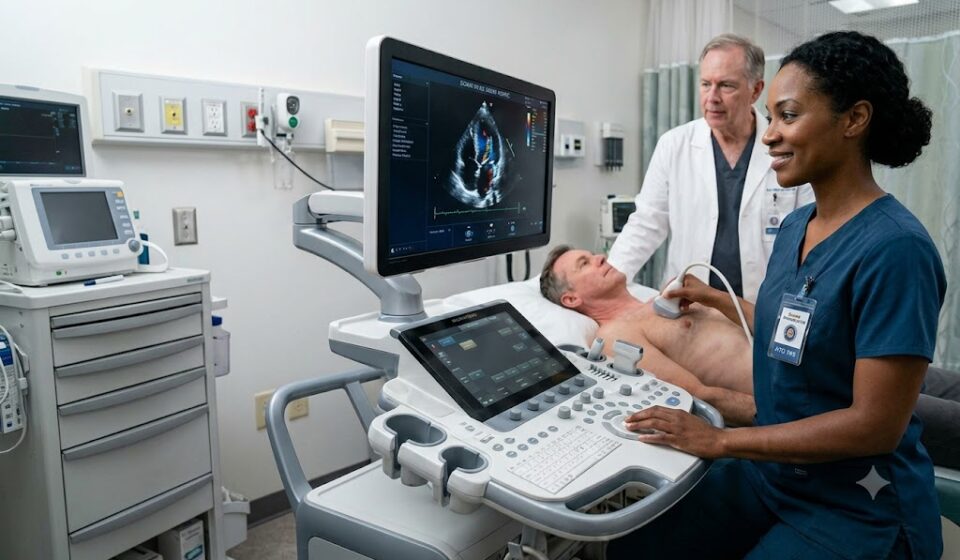
An echo tech, formally known as a cardiac sonographer, represents a vital cornerstone within modern diagnostic healthcare facilities. Consequently, these specialized healthcare professionals utilize non-invasive ultrasound technology to capture highly detailed images of the human heart. Therefore, this targeted medical imaging allows attending cardiologists to identify complex cardiovascular diseases with immense diagnostic precision.
Core Duties and Responsibilities
In addition to operating equipment, certified technologists manage critical clinical tasks to ensure optimal patient diagnostic outcomes.
-
Preparing Patients for Examinations: Initially, technicians explain the ultrasound process thoroughly while carefully reviewing the cardiac histories of individual patients.
-
Operating Ultrasound Machinery: Furthermore, professionals maneuver specialized acoustic transducers across chest walls to record real-time blood flow dynamics.
-
Analyzing Image Data: Subsequently, sonographers evaluate chamber dimensions and calculate precise blood velocities to detect underlying structural pathologies.
-
Generating Preliminary Reports: Finally, they compile comprehensive diagnostic summaries, highlighting crucial cardiac anomalies for the supervising medical team.
“Echo techs serve as the eyes of the cardiologist. Without their technical precision and anatomical knowledge, detecting subtle structural heart anomalies during non-invasive testing would be virtually impossible.”
— Dr. Elena Vance, FACC, Chief of Cardiology
How to Become an Echo Tech
Undeniably, entering this competitive healthcare field requires structured post-secondary education alongside extensive, hands-on clinical training hours. Ultimately, most ambitious individuals complete their comprehensive educational preparation within two to four years at accredited institutions.
Educational Pathways
To begin with, aspiring diagnostic professionals generally choose between three distinct and well-defined academic pathways:
-
Associate Degree in Cardiovascular Technology: Primarily, this two-year program effectively balances classroom instruction with vital, immersive clinical rotations.
-
Bachelor’s Degree in Diagnostic Medical Sonography: Alternatively, this four-year degree offers advanced training modules, successfully preparing graduates for leadership roles.
-
Certificate Programs: Lastly, these intensive twelve-month programs accommodate individuals who already possess degrees in alternative healthcare disciplines.
Certification and Licensure Requirements
Although some geographic regions omit strict legal mandates, employers overwhelmingly demand valid credentials from recognized professional registries.
-
Registered Diagnostic Cardiac Sonographer (RDCS): Granted by the ARDMS, this credential signifies exceptional technical competency regarding adult echocardiography workflows.
-
Registered Cardiac Sonographer (RCS): Offered by Cardiovascular Credentialing International, this certification validates specialized knowledge in practical cardiac scanning.
Echo Tech Career Comparison
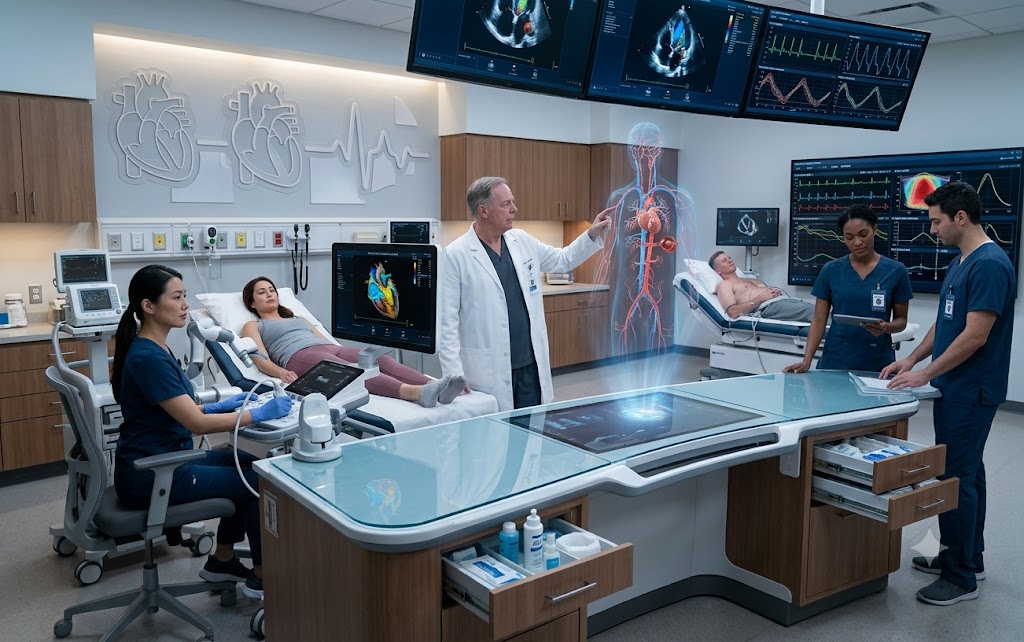
To demonstrate context, evaluating how cardiac sonography compares against alternative medical imaging professions provides valuable long-term clarity.
| Profession | Education Required | National Average Salary | 10-Year Job Growth Projection | Primary Focus Area |
| Echo Tech | Associate / Bachelor’s | $80,500 | 13% (Faster than average) | Heart structure and blood flow dynamics |
| General Sonographer | Associate / Bachelor’s | $78,200 | 11% | Abdominal organs, obstetrics, gynecology |
| Radiologic Technologist | Associate Degree | $67,000 | 6% | X-rays, bone density, computed tomography |
| MRI Technologist | Associate / Certificate | $76,500 | 7% | Magnetic resonance cross-sectional imaging |
Pros and Cons of a Career as an Echo Tech
Naturally, balancing the distinctive advantages against the inherent drawbacks ensures an informed career decision for prospective students.
Pros of Being an Echo Tech
-
Strong Compensation: First, technologists secure competitive salaries without investing the extensive time required for doctoral medical degrees.
-
Rapid Job Growth: Second, an aging global population continuously drives substantial institutional demand for skilled diagnostic cardiac sonographers.
-
Fulfilling Patient Impact: Third, these specialists directly impact patient survival outcomes by detecting life-threatening cardiovascular abnormalities early.
-
Dynamic Work Environment: Fourth, working alongside multi-disciplinary healthcare teams effectively prevents daily workplace monotony for active professionals.
Cons of Being an Echo Tech
-
Physical Demands: Conversely, scanning requires repetitive wrist pressure, which frequently induces painful occupational musculoskeletal injuries over time.
-
Irregular Scheduling: In addition, modern hospital environments regularly require staff to fulfill mandatory evening, weekend, and on-call shifts.
-
High-Stress Environments: Furthermore, managing critically ill cardiac patients requires immense emotional resilience from healthcare providers daily.
Market Demand and Job Outlook
Concurrently, the employment landscape for certified cardiac sonographers remains exceptionally robust throughout the modern healthcare industry. Indeed, official statistics project an impressive thirteen percent expansion rate for this specific diagnostic profession globally.
Key Factors Driving Market Expansion
Undoubtedly, several prominent structural transformations across global healthcare systems permanently sustain this high workforce market demand:
-
An Aging Demographic: Predictably, the expanding elderly population cohort creates an increased prevalence of chronic, complex cardiovascular illnesses.
-
Preference for Non-Invasive Procedures: Meanwhile, modern clinics favor echocardiography because it reduces patient risk compared to invasive catheterization alternatives.
-
Technological Advancements: Simultaneously, the rapid evolution of handheld ultrasound devices vastly expands technology applications into emergency rooms.
Related Video
To illustrate, watching an expert operate machinery clarifies the daily workplace realities of professional diagnostic cardiac sonographers.
Frequently Asked Questions (FAQ)
What is the difference between an echo tech and a vascular tech?
Clearly, an echo tech evaluates internal heart structures, whereas a vascular technician images peripheral blood vessels instead.
Do echo techs work in operating rooms?
Yes, certified technologists frequently assist cardiothoracic surgeons by performing crucial transesophageal echocardiograms during complex surgical procedures.
Is the echo tech certification exam difficult?
Indeed, these comprehensive registry examinations require deep, thorough mastery of ultrasound physics, cardiac anatomy, and hemodynamics.
Can an echo tech perform scans independently?
A technologist operates equipment independently, but a licensed cardiologist must provide the official final diagnosis afterward.
References and External Citations
Article Disclaimer
The information contained in this article serves strictly informational and educational purposes. It does not constitute formal medical or career advice. Educational requirements, job growth statistics, and average salaries fluctuate based on geographic location, institutional policies, and macroeconomic shifts. Aspiring professionals should verify local state regulations and specific program requirements prior to enrolling in any academic track.